TEPEBAŞI
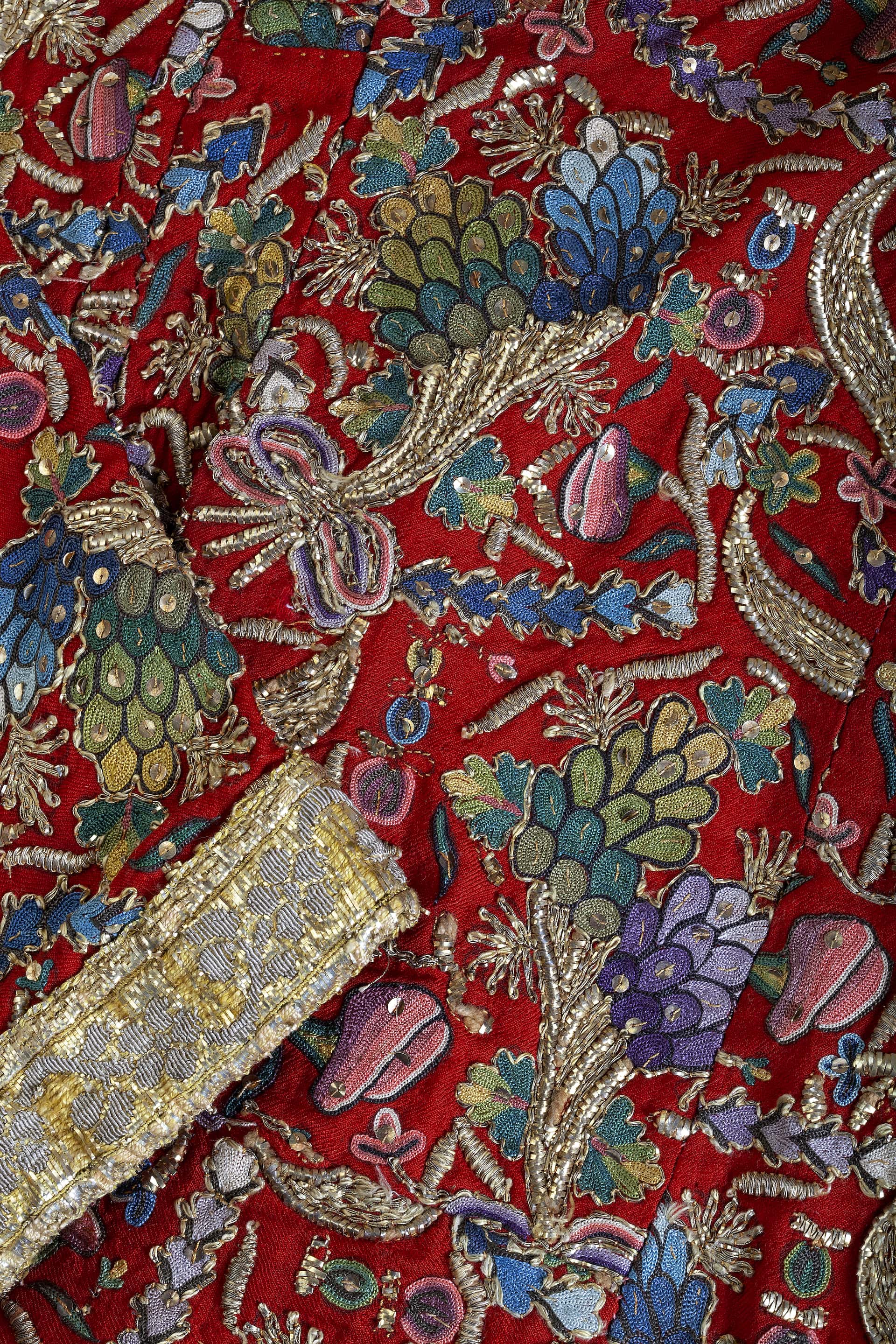
The looms processing the woven fabrics were located in the studios in Tepebaşı and Galata. Therefore, Hüseyni embroidered fabrics are also referred to as “Tepebaşı” and “Galata” in the sources. Heavily embroidered fabrics were prepared with gold-silver alloy wire thread, straight wire, cut and twisted wire, sequins, and beads twisted in different ways for all kinds of fabrics. It is understood from the sources that these embroidered dress fabrics called “Hüseyni” appeared at the beginning of the 18th century and became more flourished and widespread in the 19th century.
Dresses sewn from embroidered fabrics in the 18th century became fashionable. The decree that Sultan Ahmet III sent to the İstanbul Kadi in 1715 to prevent the consumption of gold wire used in fabrics and embroidery consists of many warnings: “... for a few years now, heavy thread embroidery and donluk (a caftan) firenk pesent and silver tassel fringe and women’s yemeni (kerchief) and yemenis used for breast macrame, silver braided cord, ... silver thread brocaded goods of raw silk have appeared ... and this will lead to the standstill of the mint, … Preserve these goods for the miri, and punish those who process them with hard labor on the grounds that they object to the edict”.
There are many documents showing that warnings were given by the palace one after another to reduce the consumption of gold thread and that they were ignored. These restrictions were not abided by, particularly by the women of the palace, producers, the embroiderers, the tailors, and the shop keepers of the bazaar. For this reason, the edict of 1811, which Sultan Mahmud II sent to the kadi of İstanbul, is about “the subjection of the shop keepers who were engaged in the art of embroidery called Hüseyni to a strict order”.
Tambouring and dival embroidery techniques are used in Tepebaşı fabrics. Silk, cut wire, twisted wire, gold thread, sequins, beads, coral, and pearls were used as materials. Embroidery is generally on a red ground and different colors are used in the embroidery thread. It has a dense, intricate appearance, in which the shapes of small flowers, branches, leaves, ribbons are embroidered with wire, thread embroidery, and silk. Tepebaşı fabrics were used in clothing, especially women’s clothing.