ANKARA SOF
It is noted in the literature sources that sof weaving is one of the Seljuk weavings and was woven in Ankara much earlier than the 16th century. Sof was woven especially in Ankara and its surroundings, Thessaloniki and Yambol. Woven from the mohair of Angora goats, sof has played an important role in Ankara life and trade since the 16th century. In an entry in the Ankara court records dated 1590, it is written that Süleyman Ağa, who came to Ankara by order of the Ottoman Sultan, collected taxes from 621 looms functioning here. In fact, it is accepted that the number of the looms in Ankara increased to 1000 in the middle of the 17th century.
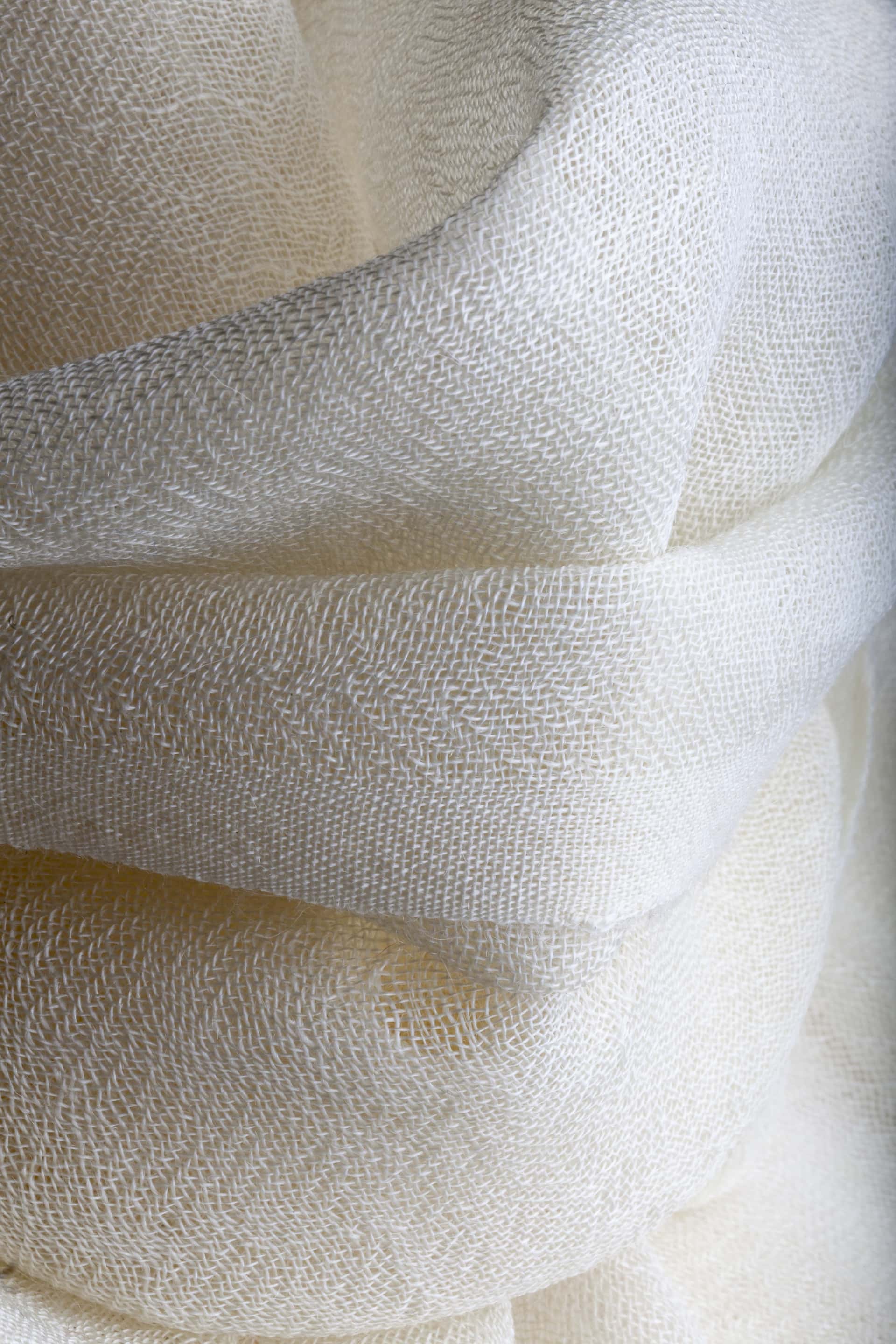
Ankara Sof is woven with plain, twill, and satin weaves, using Angora goat mohair for the warp and weft. Long fibers of Angora goats up to 6 months old are preferred for high-quality sof weaving. Ankara Sof is a bright fabric due to its material feature. Extruding is used to embroider the fabric. In addition, for blankets, prayer rugs, and floor mats, it was used to create a ground fabric for hairy weavings such as saçaklı kebe/velense, using Angora goat mohair. Blue, burgundy, purple, brown, and natural white mohair colors are used in the weaving of the sof. There are also different types of Ankara Sof such as tempered, wavy, muhayyer, sali, fine, and thick. Sof fabric was used as abaya, cardigan, skirt, shalwar, shawl, as well as floor mats, blankets, and prayer rugs through the Saçaklı Kebe/Velense technique.